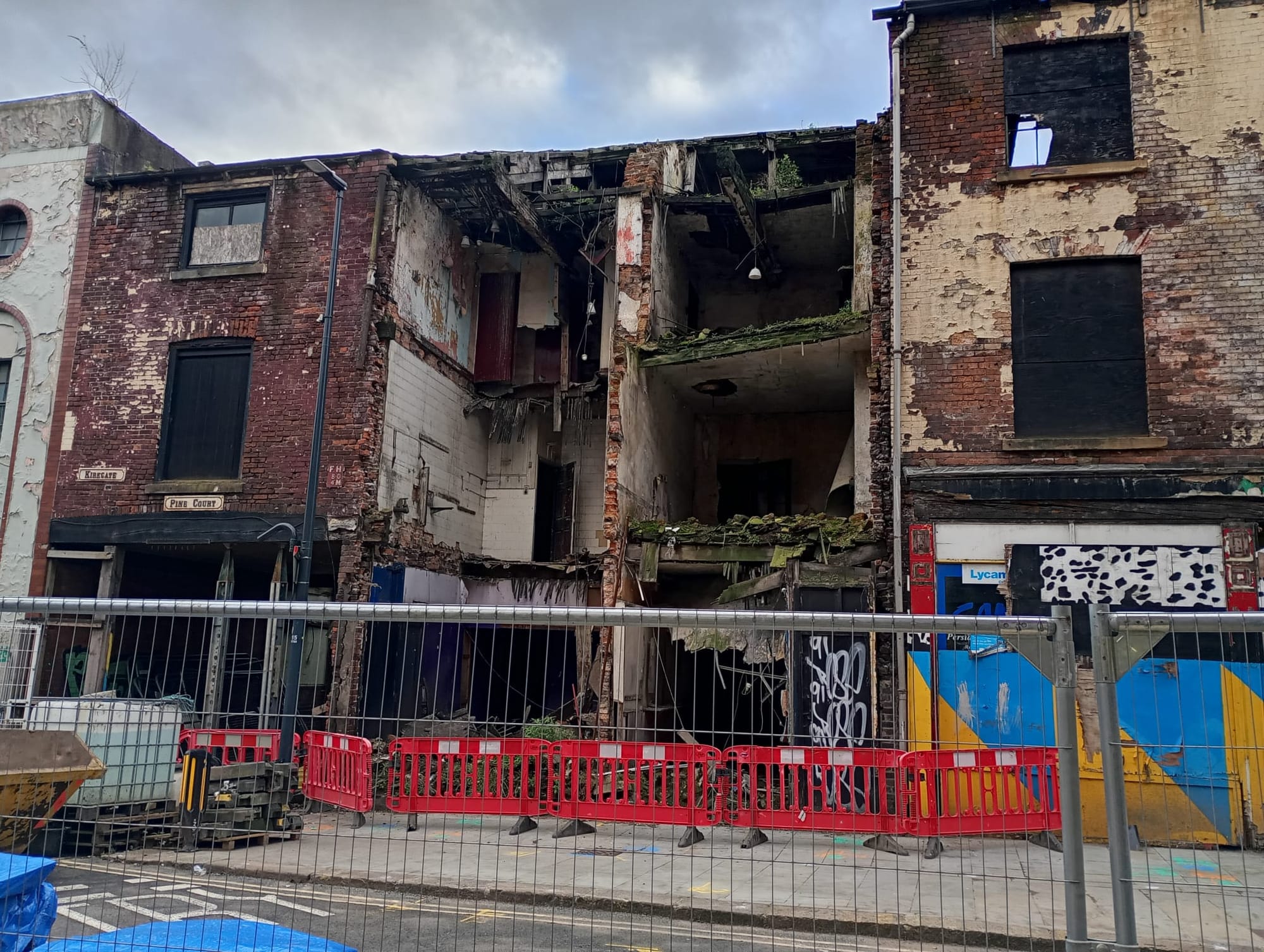

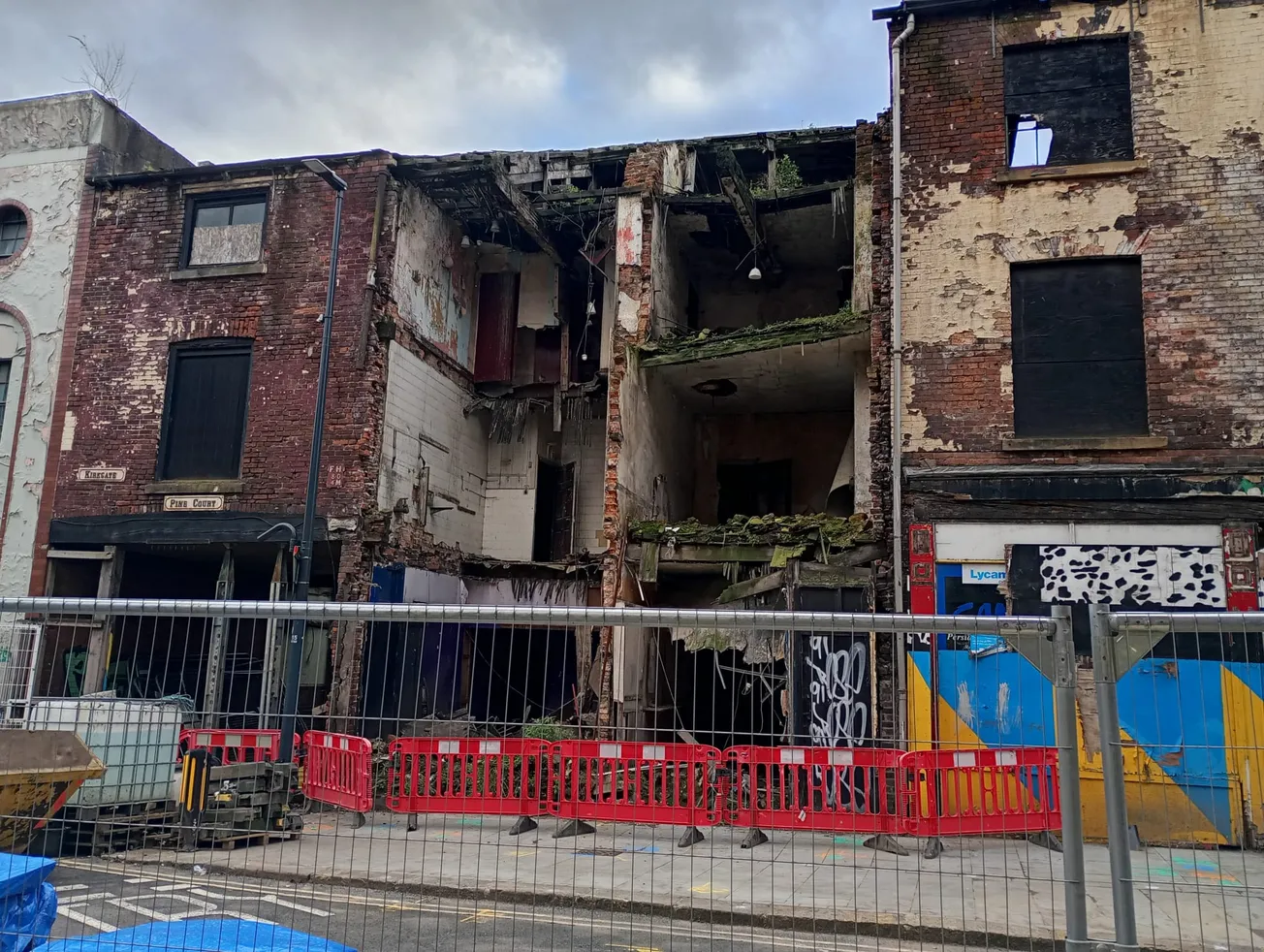
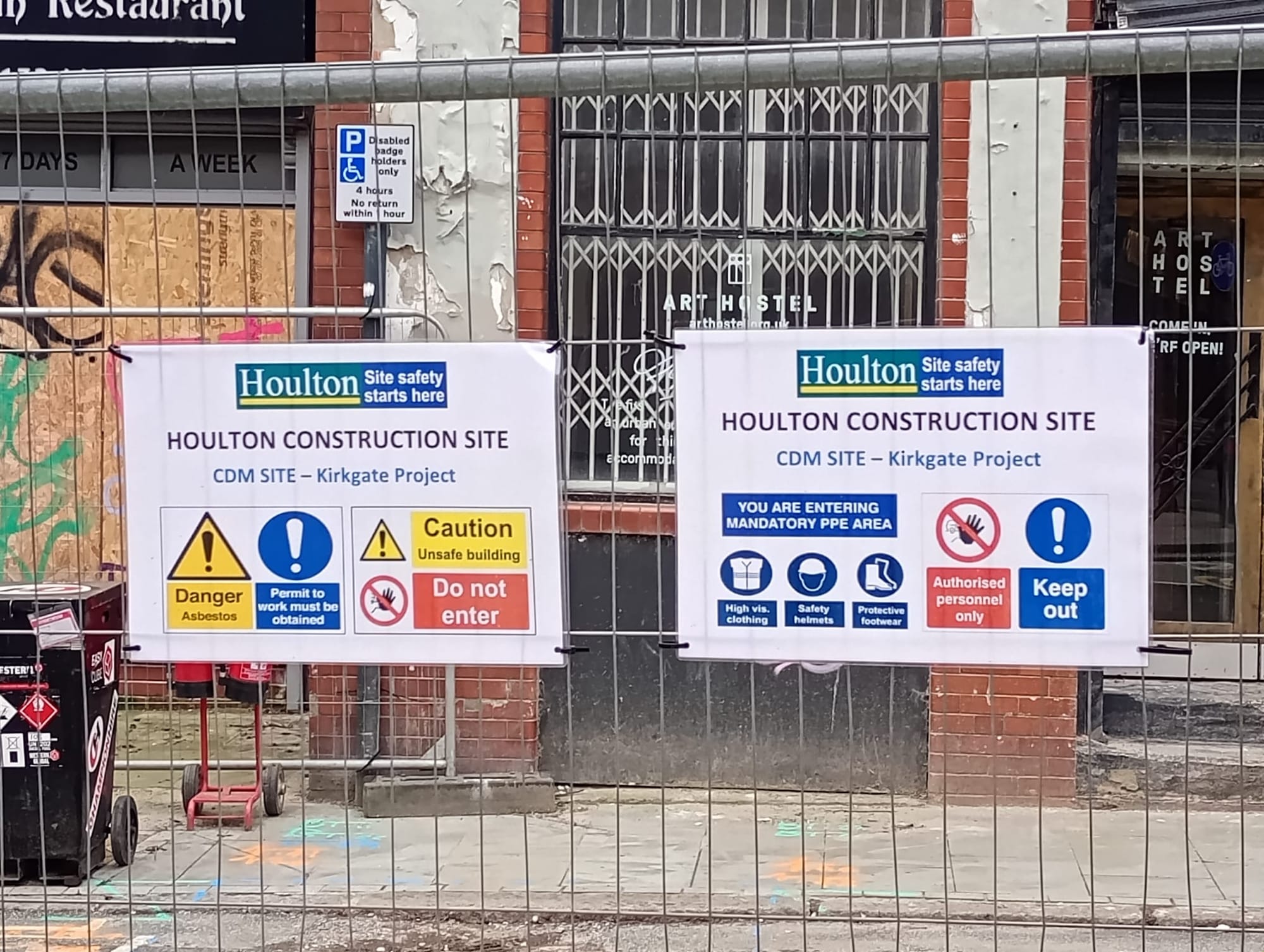
Standing on Kirkgate, behind a fence erected to protect the general public, I stare up at two historic buildings, each with one half laid open like a dollhouse. There are small plants growing on the first and second storeys, at least where the floor hasn’t yet fully succumbed to gravity. Orphaned light fixtures dangle from rotten rafters. In the top left corner, I can see a door swung open onto a sheer drop. It’s as if, two years ago, a giant hand reached down, dug its fingers into the 19th century roof tiles and tore a chunk of both buildings off in a petulant rage.
On the day I visit, it’s clear no one has touched it since. Fully exposed to the elements, the buildings have continued to deteriorate. Katie, a bar manager at the Duck and Drake across the road, tells me you can hear more chunks fall off every time there’s a strong gust of wind. She’s under the impression that the buildings are listed, which is why they haven’t simply been knocked down, but that’s actually mistaken: terraced buildings like this aren’t significant enough to receive listed status. The pub we’re standing in is probably just as old. However, Kirkgate — “the oldest street in Leeds” — is a conservation area, which should offer the buildings within it protection from the ravages of time. These buildings have, quite evidently, not been conserved.
But you don’t need to be a heritage fan to think that large buildings in city centres shouldn’t suddenly collapse. This they did, on 12th April 2024. Photos from that day show a huge pile of masonry heaped on the pavement, one that would have flattened anyone with the misfortune to be walking past. As Noah Ringrose, an employee at the nearby Fred Aldous art shop, told the BBC then: “It’s a miracle no one was killed.”
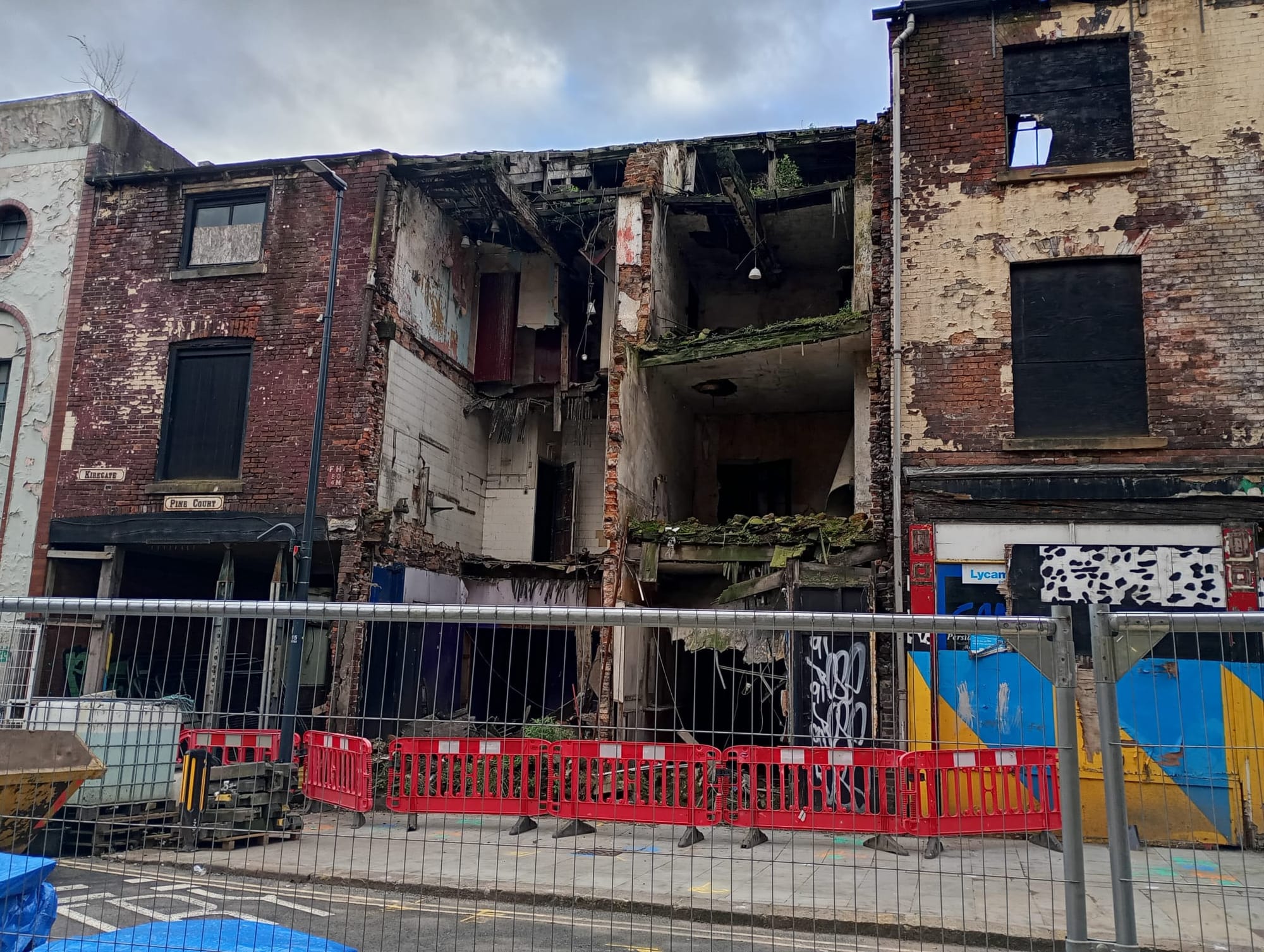
To make matters worse, the affected buildings, numbers 84 and 85, aren’t the only ones in a perilous state of disrepair. The year before, 86 and 87 next door caught fire; they remain gutted to this day. All four buildings — as well as numbers 83, 88, 89 and 91 — are in need of urgent repair work, according to a notice issued by the council to the buildings’ owner.
If those owners could have tried to claim ignorance about the buildings’ safety before the collapse, that’s now impossible. And yet, almost two years on there’s no sign of any action being taken. What is going on? Trying to answer those questions would unravel a strange tale of years of stalling, huge grants unclaimed and one of Leeds’ richest and seemingly most elusive families: the Cohens.
‘Delay and delay and delay’
“It’s about neglect,” says Martin Hamilton, CEO of Leeds Civic Trust, a non-profit set up to preserve “the history and character of the city” by advocating on behalf of heritage buildings. “There has been a track record of allowing buildings on Kirkgate to fall into disrepair.” In the decade he’s worked at the trust, there have always been issues around this historic street, which is unusual given its prime city-centre location. “In general, city centre buildings are dealt with quickly because of the land value,” he says. “That’s why this whole thing is very strange.”
After some digging, the mystery only deepens. Over an eleven-year period, which came to an end just two years ago, the council was offering grants to private property owners on Lower Kirkgate to help restore their buildings, after the area was awarded £1 million from the National Lottery Heritage Fund. By the time the scheme came to an end, it had successfully funded the restoration of eight buildings on Lower Kirkgate, including the Grade II-listed First White Cloth Hall. Council documents reveal they were keen to offer grants for 83-89 Kirkgate too but, for unclear reasons, it was impossible “to enter into acceptable grant funding agreements” with the owners of these buildings.
All eight of these buildings on Kirkgate belong to the Cohens, a very wealthy family that has been involved in the Leeds property game for decades. The family’s 66-year-old patriarch, Henry Selwyn Cohen, is the director of 15 property companies registered to the same address in Leeds and, while only seven boasted significant assets at the end of March last year, these collectively totted up to £23.8 million. In 2009, “Henry Cohen and family” appeared in the Sunday Times’ Rich List, with a reported wealth of £38 million.
Hang on... what am I reading? This is a preview article for a new local newspaper which we're launching in May. Over 500 people have pledged to support us. If you think this kind of in-depth journalism is what Leeds and West Yorkshire needs, then please pledge your support below - and nab our 20% founding member discount before its too late.
At the time of the collapse, the buildings on Kirkgate were owned by a Cohen company called City Fusion. Among those who take an interest in the behind-the-scenes machinations that shape the fabric of Leeds, it’s a familiar name. During my search for information, I come across a number of posts discussing City Fusion on Skyscraper City, a forum dedicated to all things urban development, where a thread about the state of Kirkgate has racked up 31 pages of responses. “The council should bulldoze the buildings, put the rubbish in lorries, and then tip it on Mr Cohen's drive,” reads a response from last year. In another post from January this year about 1 Crown Street, a property just off Kirkgate that is currently empty and fenced off, a user quips that it “must be another City Fusion special”. (The property is indeed owned by City Fusion at the time of writing.)
“I’m your typical ‘outraged of Tunbridge Wells’ type person,” this user, Mark Sturdy, tells me, after agreeing to speak on the phone. “I’m interested in local history, I’ve lived in Leeds for a long time and I work in the city centre, so these buildings are all on my commute.” As far as he can tell as an interested layman, the Cohens purchased a large number of buildings on Kirkgate in the early 2000s, including the First White Cloth Hall. It is the saga around this building, “which was derelict forever,” that originally got him interested in the Cohens.
In 2010, as reported by the Guardian, Leeds council was forced to demolish part of the First White Cloth Hall, “one of the most important historic buildings in the city,” after an inspection revealed an adjoining building, 101 Kirkgate, was on the verge of collapse. “Because it helps support the whole structure, there is significant risk that both buildings could collapse,” a council spokesperson said at the time. “Although it is regrettable we have to carry out this work, our top priority has to be the imminent risk to public safety." On the phone, Mark tells me that, even though it was disrepair in the neighbouring building that imperiled the historic hall, he feels the Cohens are still partly culpable for failing to keep their own building safe. In fact, after I purchase the property title for 101 Kirkgate online, I discover that this building was also owned by City Fusion.
The council, however, didn’t seem to have held this against the Cohens. At the time of the regrettable demolition, their spokesperson told the Guardian that they were working with the First White Cloth Hall’s owners to bring forward a regeneration of Lower Kirkgate, with the help of the aforementioned lottery funding. This regeneration project, which officially launched three years later in 2013, was known as the Lower Kirkgate Townscape Heritage Initiative (THI).
It’s clear the Cohens played a key role in the design of this scheme. Paul Nathan-Geary — then the Head of Development and Asset Management at one of the Cohen companies — lists the “Kirkgate Leeds Renaissance” as one of his “most professionally rewarding projects” on his LinkedIn profile, adding that he helped develop a “comprehensive regeneration masterplan” for the area. The close working relationship between the Cohens and the council at this time makes it slightly baffling that, for almost half a decade after grant funding became available, no work was done to restore the First White Cloth Hall.
“There’s been a tendency to delay and delay and delay,” Martin from Leeds Civic Trust says, adding that the lack of action on First White Cloth Hall was something the charity became “particularly frustrated about” as the years passed. He recalls there were “constant reassurances that something would happen” from the Cohens, which ultimately came to nothing. From an outsider’s perspective, Mark remembers finding the stasis similarly baffling. “Every year there would be another story in the press saying the First White Cloth Hall would be redeveloped and they had the lottery funding,” he says, “but it never seemed to get off the ground.”
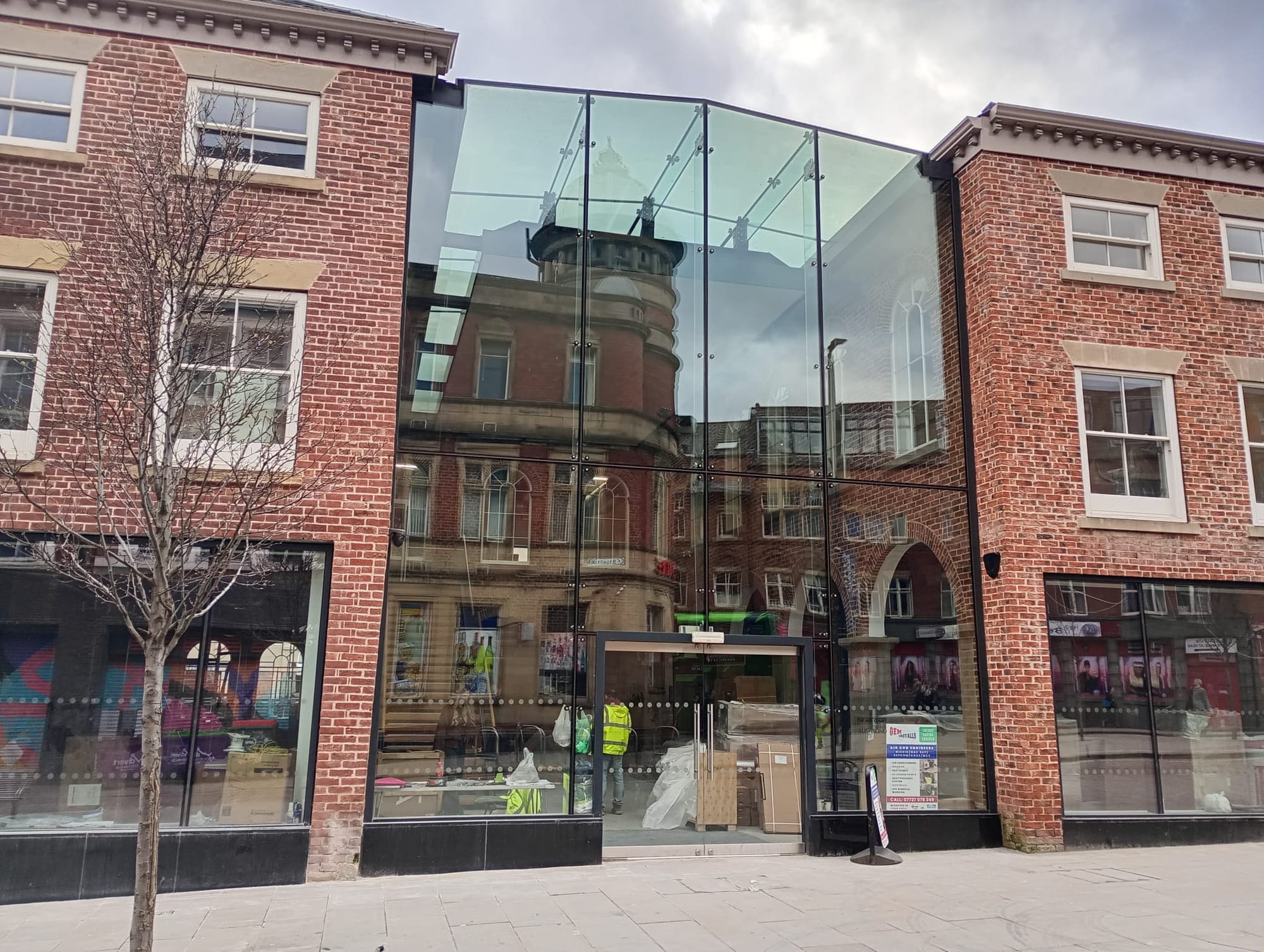
These days, the First White Cloth Hall is in much better shape, although this isn’t something the Cohens can claim credit for. In 2017, City Fusion sold the building — for the curiously low price of £1 — to Harrogate-based developer Rushbond. With the help of half a million pounds from the THI scheme and a further half a million from Historic England, Rushbond were able to complete their award-winning restoration of the building in 2021. (Three neighbouring properties, including 101 Kirkgate, were also sold by City Fusion to the same Rushbond subsidiary on the same date, also for £1.) Though I reach out to Rushbond in the hopes of interviewing someone involved in the project, who might be able to explain how these sales came about, I never receive a response.
In the five years since the restoration was completed, the restored hall has remained unoccupied, although Martin tells me a tenant will finally be moving in next month. “So that’s positive, even if it’s taken some time,” he adds. He has a theory as to why it’s taken so long. “Businesses wanting to move to Kirkgate might like the property,” he says, “but do they want to move onto a road that looks closed?”
‘No one seems to want to take charge’
That brings us back to where we started: the collapsed and still-crumbling buildings just a short walk away. Until the structure is made safe, the fence extending all the way across the road, which has blocked Kirkgate off from traffic for the last two years, cannot come down. And, until then, “the oldest street in Leeds” will continue to look like a building site, a situation local businesses allege attracts antisocial behaviour and puts potential customers off. So why is it taking so long?
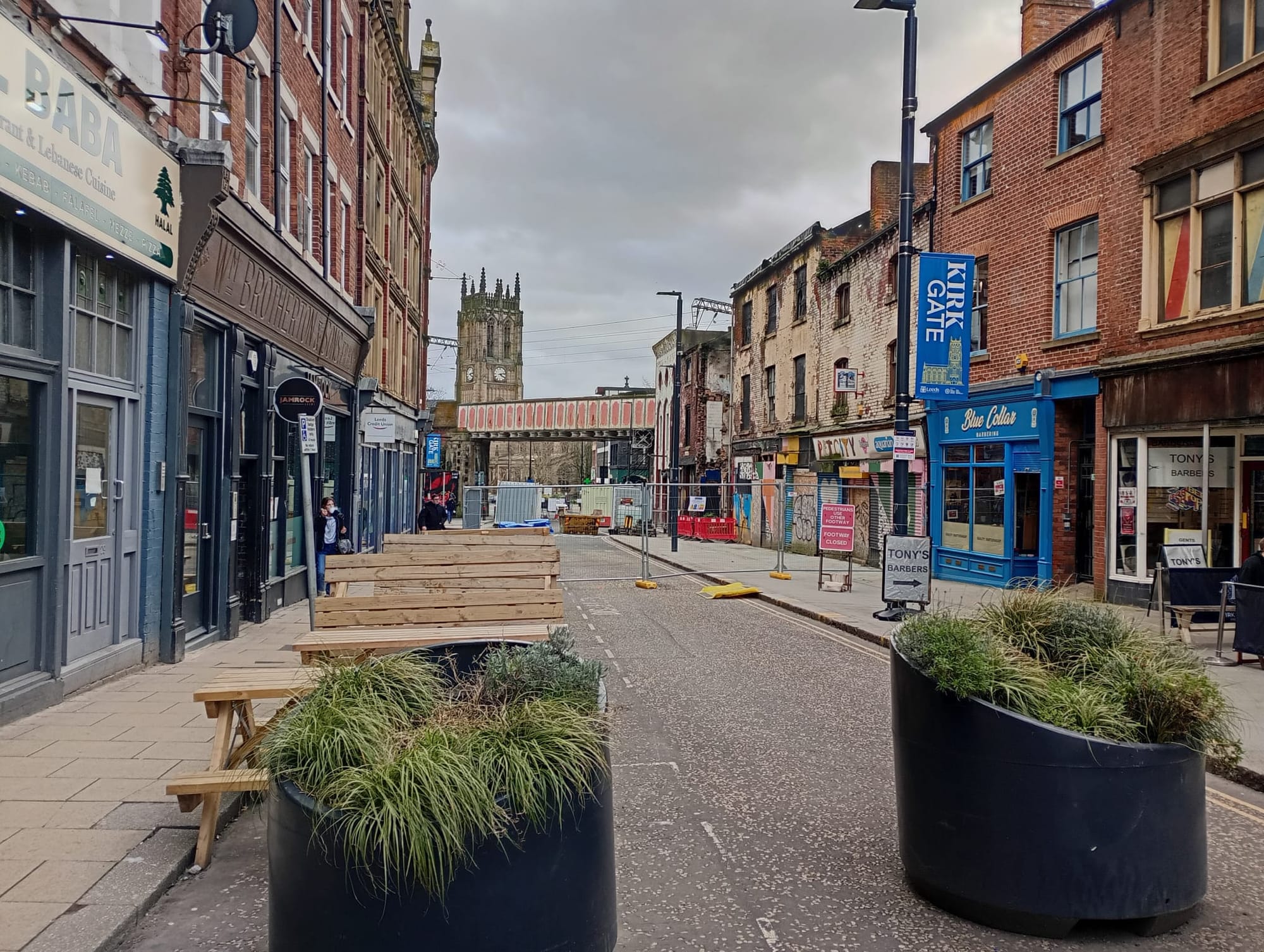
Oral Blackford, the 45-year-old owner of Jamaican restaurant Jamrock, is very obviously at his wit’s end about this. On the day the buildings collapsed, his relatively new restaurant was fully booked. “We had people queuing up the street,” he tells me. Afterwards, his takings were almost immediately cut in half. “If nothing changes quickly, I don’t think I can carry on like this. I’ve given myself another year and a half, max.” Oral adds that he came to the UK from Jamaica in 2023 with only 20 US dollars to his name and worked odd jobs to make his dream of owning a restaurant come true. “I’ve taken on so much debt, I’ve put all my life savings into this,” he says. “For me personally, it’s a disaster.”
Though he’s aware the council is in a stalemate with the Cohens, he’s frustrated that nothing has happened. “They’re doing what they’re doing,” he says of the council, “but we’ve not really benefited yet. This street has potential but no one seems to want to take charge and give it what it deserves.”
We're hiring! If you'd like to work for “one of the most interesting and impressive media startups of the last decade” (as kindly said by John Burn-Murdoch of the Financial Times) then apply now. Hurry though - applications close 29th March.
Fortunately, he should start to see progress in the next few weeks. Though Martin admits “it’s not obvious when you walk past,” he tells me contractors hired by the council arrived on the site last month to begin a six-week period of preparatory work, after which they will begin stabilising the buildings so that the fence came come down, a process expected to take around four months. “The council has an order which enables them to do urgent work and bill Henry for it, which is what they’re doing, but it’s not about bringing them back into use,” Martin explains. “Once the buildings are, at last, stabilised, then the question is what to do with them.”
This order is an Urgent Works Notice, which the council sent to the Secretary of State for Culture, Media and Sport in August 2024, around half a year after the collapse. Despite the urgency, it took four months to approve and was finally signed off in mid-December. It covered not only the collapsed building but also the seven other dilapidated properties which City Fusion owned on the street. After approval was granted, however, a spokesperson said the council was “made aware” that City Fusion had sold all but one of the relevant buildings to another company, Kirkgate Land Residential, for a combined price of just over £1.2 million. Kirkgate Land Residential is also owned by the Cohens.
This change of ownership meant the council was forced to apply for two more notices, which were granted and sent to both Cohen companies in February of last year. It was only once the Cohens had indicated that they did not intend to carry out the stabilisation work themselves that the council could take matters into its own hands. They began to assess the buildings and plan how to manage the delicate operation, which quickly raised even more issues. “The findings of that activity meant some variations were needed to the preservation methods that would be employed during the stabilisation work,” a council spokesperson explains. “Updated urgent works notices reflecting those variations were served on the owners in January this year.”
Again, the council had to wait for the Cohens to refuse to act before they could step in, which is why it was only last month that contractors finally arrived on site. “Perhaps this is just how property development goes in this country,” Mark muses, “but progress does seem to be grindingly slow.” While he’s aware the council has a legal right to instruct the Cohens to cover the cost of the work, he’s highly doubtful that bill will ever be paid. “I suspect the Cohens will give them the run around,” he says, “and the council don’t seem to be particularly agile.”
At the same time as carrying out the work to make the buildings safe, the council is also attempting to buy five of these properties — 83 to 89 — “with a view to them being fully restored and brought back into meaningful long-term use,” with the spokesperson noting it is prepared to use compulsory purchase powers “as a tool of last resort”. Last July, the council made “a market value offer” for the buildings but “to date, this has not been accepted”.
The problem, as Martin points out, is that “the buildings themselves have little value” — especially in their current state — but the land they sit on is very valuable indeed. He reckons this is also why the Cohens had very little appetite to restore the buildings themselves, even when grant funding was available. “You’re talking about a seven figure sum to restore buildings that have almost no value,” he says, “so it’s actually a very tricky situation.”
Council documents provide some evidence for this view. In December 2023, one year before the THI funding scheme was about to finally come to end, City Fusion applied for planning permission to restore 83-89, which the council granted in March of the following year. However, according to a council report on Kirkgate from last year, City Fusion then insisted that the condition of the buildings meant “it was not possible to obtain contractor tenders to carry out the works at anything like a viable cost”. Furthermore, in order to be eligible to receive a grant from the THI, work on the buildings would need to be finished by the end of that year, which was not a deadline the Cohens felt they would be able to meet. Given they’d had over a decade at that point to bring a scheme forward, this was arguably a problem of their own making.
Martin is unable to offer much insight on why the Cohens didn’t hop to it at an earlier date. “The family does own other buildings further up Kirkgate, which they have recently renovated and restored, actually very nicely,” he says. “What’s frustrating is that the same has not happened to these buildings at the bottom of the street. Maybe the ones they leave are the ones that are more difficult.”
Mark takes a far less charitable view. “The buildings at the bottom of Kirkgate were left to rot and rot and rot and now we see the result,” he says. “One burned down and another collapsed, thanks to continued inaction.” While he readily admits “they’re not spectacular buildings,” he points out that Lower Kirkgate was unique in being a “complete streetscape” of buildings from the 19th century. “There’s not a row of buildings anywhere else in the city centre that captures that period.”
However much he blames the Cohens, he also feels that the council should bear some part of the blame. “They do seem to have been toothless really. They have powers to issue enforcement notices when buildings are clearly unsafe, which certainly these buildings were,” he says, sending me a photo he took of the now-collapsed buildings two months before they gave way, “where the brickwork is visibly bulging”. He finds the decade-long stalemate ridiculous. “It seems the council’s involvement has been to repeatedly offer City Fusion grant funding, which they have not taken up. How many times do they have to fail to act before you have to get a bit more assertive than: ‘would you like some money?’”
When I put this criticism to the council, a spokesperson is adamant that they did everything they could. “To be clear, the problems on Lower Kirkgate are not of the council’s making. We are confident that our actions in relation to these buildings have been robust, fair and proportionate, both before and since the partial collapse. Repeated attempts were made over a period of several years to facilitate improvements to the properties using grant funding,” they write, adding that this proved impossible despite the council’s best efforts. “We recognise that the condition of the buildings has been a source of frustration for the local community for some time. We would stress that all councils must aim to strike a balance between the rights of individual property owners and protecting, in the public interest, the character and appearance of an area in line with established planning policies.”
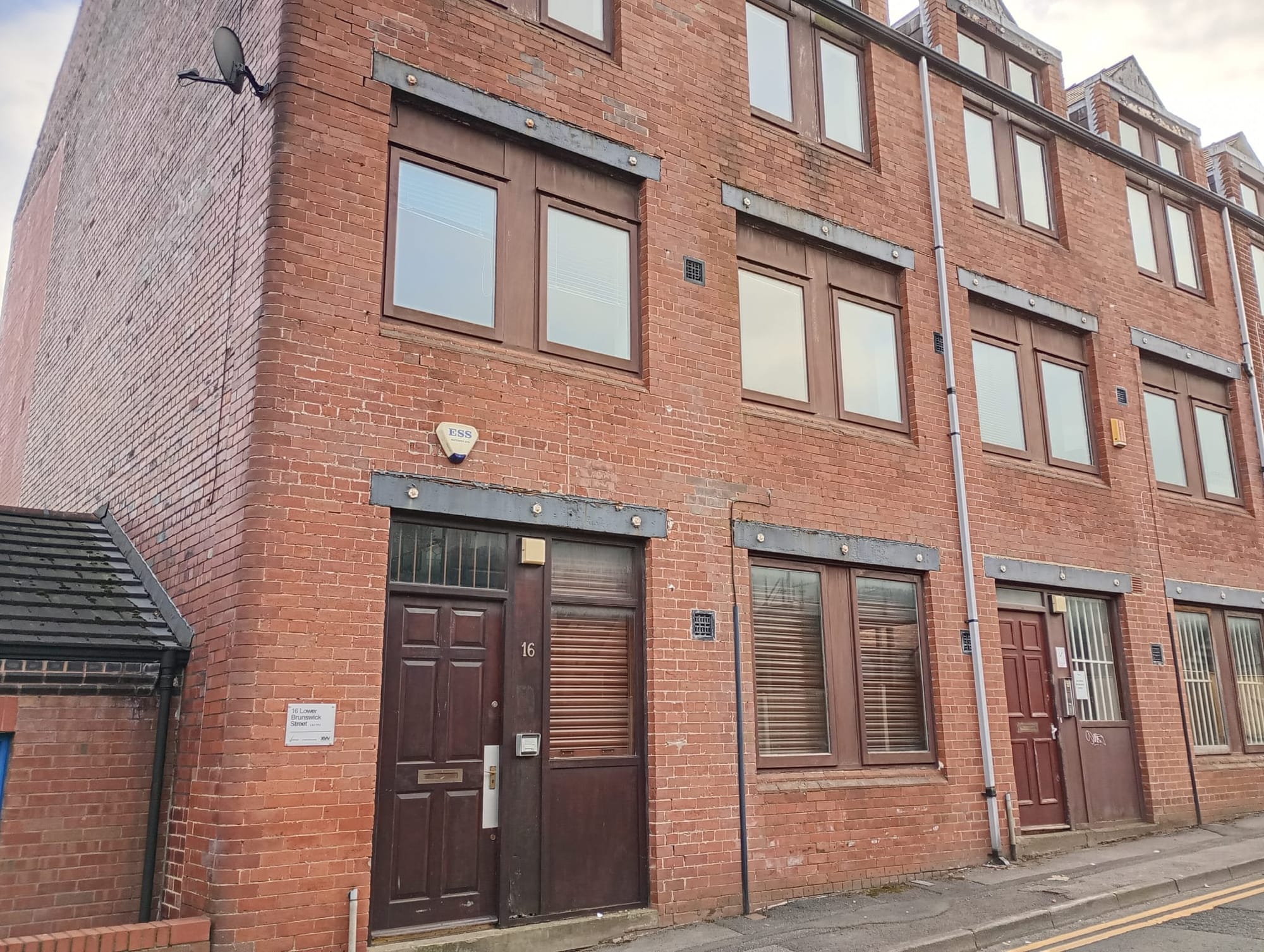
What do the Cohens themselves have to say? Much like the council, I’ve struggled to get them to engage. I attempted to contact Henry and Reece Cohen by email and on LinkedIn, but received no response. Multiple calls to the office that all 15 of Henry’s companies occupy, on Lower Brunswick Street, all went unanswered. I even visited it twice, pressing repeatedly on an intercom that didn’t appear operational and hammering at the door, again to no avail. The shutters of the building were down, even though it was during work hours on a weekday, and I could hear an insistent beeping from within.
“Because they keep such a low profile, it’s hard to get a sense of their motivations,” Mark admits, having made his own attempt to get to the bottom of this mystery in the past. “I don’t know their reasons behind buying the buildings, considering how little they’ve done with them and the mess they’ve ended up in. Perhaps it was just cheap real estate at the time.” If he was being charitable, he might suggest the problem is they have a lot of properties and “a habit of hugely over-extending themselves”. In a cynical mood, however, he suspects “they were just waiting for the buildings to collapse so they could flatten them and rebuild”.
This is the view Oral takes, based on conversations he says he had with Reece Cohen. “All they want is to knock the building down and rebuild but the council are stopping them. The council wants them to restore it but Reece told me they don’t see anything to restore basically,” he claims. (I put this to both Henry and Reece in one of my several unsuccessful attempts to reach out.) Others I speak to point out that the Cohens also own the land behind these buildings, which is currently the Crown Street Car Park and which they received planning permission to build flats on in 2019, although nothing ever came of this. Perhaps, some suggest, the family hoped to clear the buildings on Kirkgate and fold the land into an even larger development.
Whatever their reasons, the end result for Kirkgate has not been good. “To be honest, I don’t think [the Cohens] care that much about the street,” Oral adds sadly. “It doesn’t seem like it to me.”
We're on a mission to launch great local journalism in West Yorkshire. Hit the button below to pledge your support.
We're trying to spread the word about our new newspaper. If you liked today's article, please give it a share. Thanks.