
Johnny Valente said: “Our wonderful Leeds city councillors thinking empty bike lanes will help,” while Andy Gott joked: “The seven cyclists who use it will be chuffed to bits.”
While perusing the Yorkshire Evening Post website earlier this year, a combative headline caught my eye: “Readers criticise 'empty bike lanes' as Leeds Council plan to revamp Whitehall Road layout.” According to those who spoke to the YEP, the prolific cycle lane building taking place in Leeds is a waste of time and money. They’re taking away space from cars – but barely anyone is actually riding on them.
I’m not a total cycle nut, but I am one of those people who has been to the Netherlands, seen the infrastructure, and thought: yes, this is lovely. Let’s have more of this, please. The new bike lanes seem to meet that standard: wide and properly separate from traffic. Still, if they’re not encouraging more people to swap four wheels for two, then perhaps that money could be better spent. But is that really true?
One way to answer that question is to look at the lanes that have been there for a bit longer — are they having an impact on how people travel? This leads me to the Cycle Superhighway 1 (or CS1, for short). In June, the CS1, which runs between Bradford and Leeds city centres, will celebrate its 10th birthday. Helpfully, Leeds council collects live data on its usage – more on that later. But, before crunching the numbers, I decided to give it a go myself.
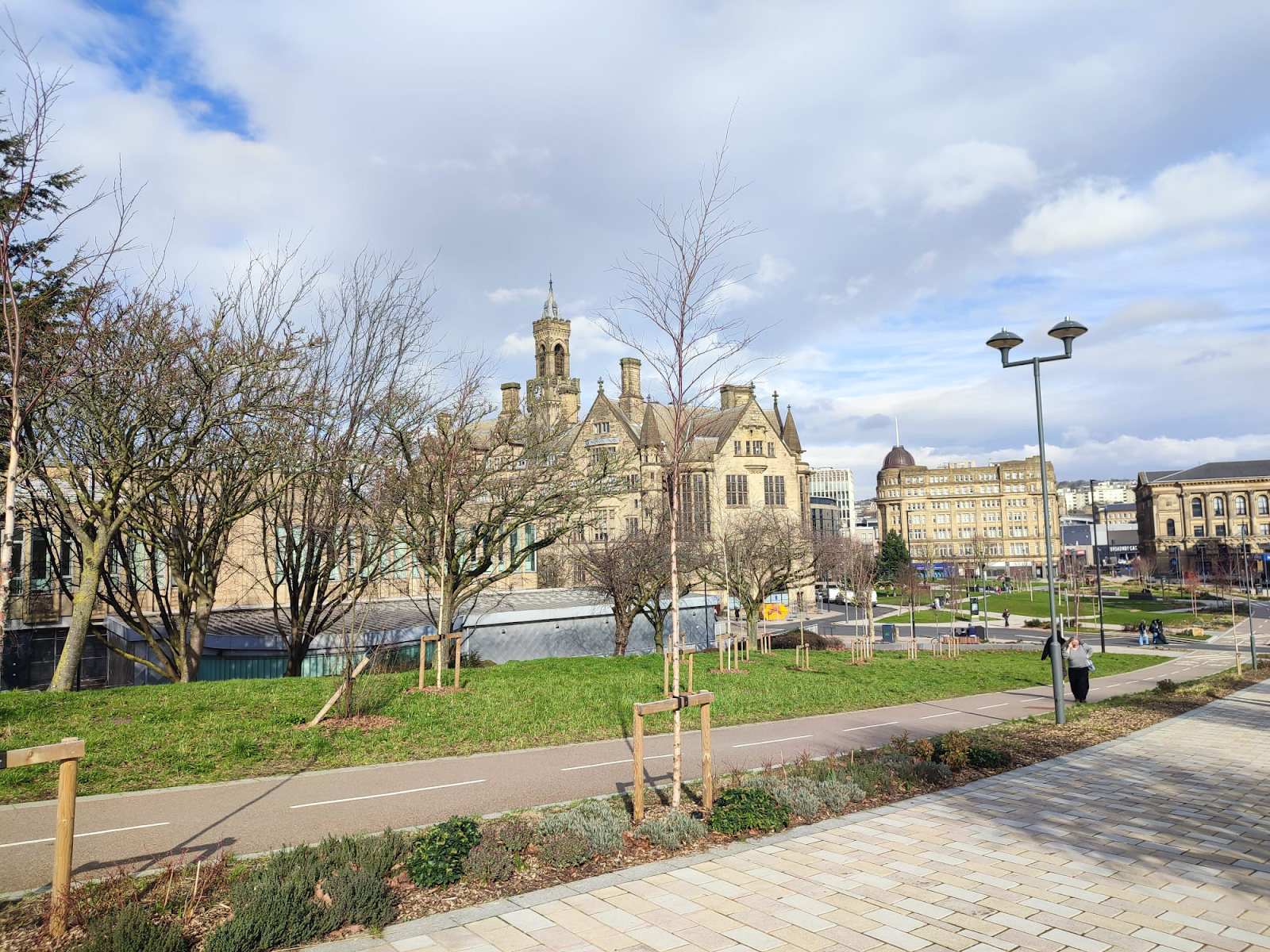
When I arrive in Bradford city centre, on a gorgeous spring day, I have to pinch myself. These are some incredible bike lanes. The smooth, gently winding path that wends around the City Hall, before easing upwards towards the Science and Media Museum, creates that perfect “desire line” effect, where you’re itching to get round the corner and see the next bit. It’s got little pockets of plants and saplings, which will one day cast it in dappled shade. It helps that the rest of the centre is pedestrianised, so you can hum along without fear of being knocked about. If this is what the CS1 is like, I think, I’m in for a treat.
Want to find out more about our plans for local journalism in Leeds and West Yorkshire? Just click below.
Alas, it doesn’t quite work out that way. The CS1 starts just by the cathedral and, straight away, I can tell I’m going to be in for a less tranquil ride. Only 100 metres away, three vans are parked in the lane, while workmen do something or other to a box of wires. I skirt around them, thankful that no cyclists are coming the other way, and keep going.
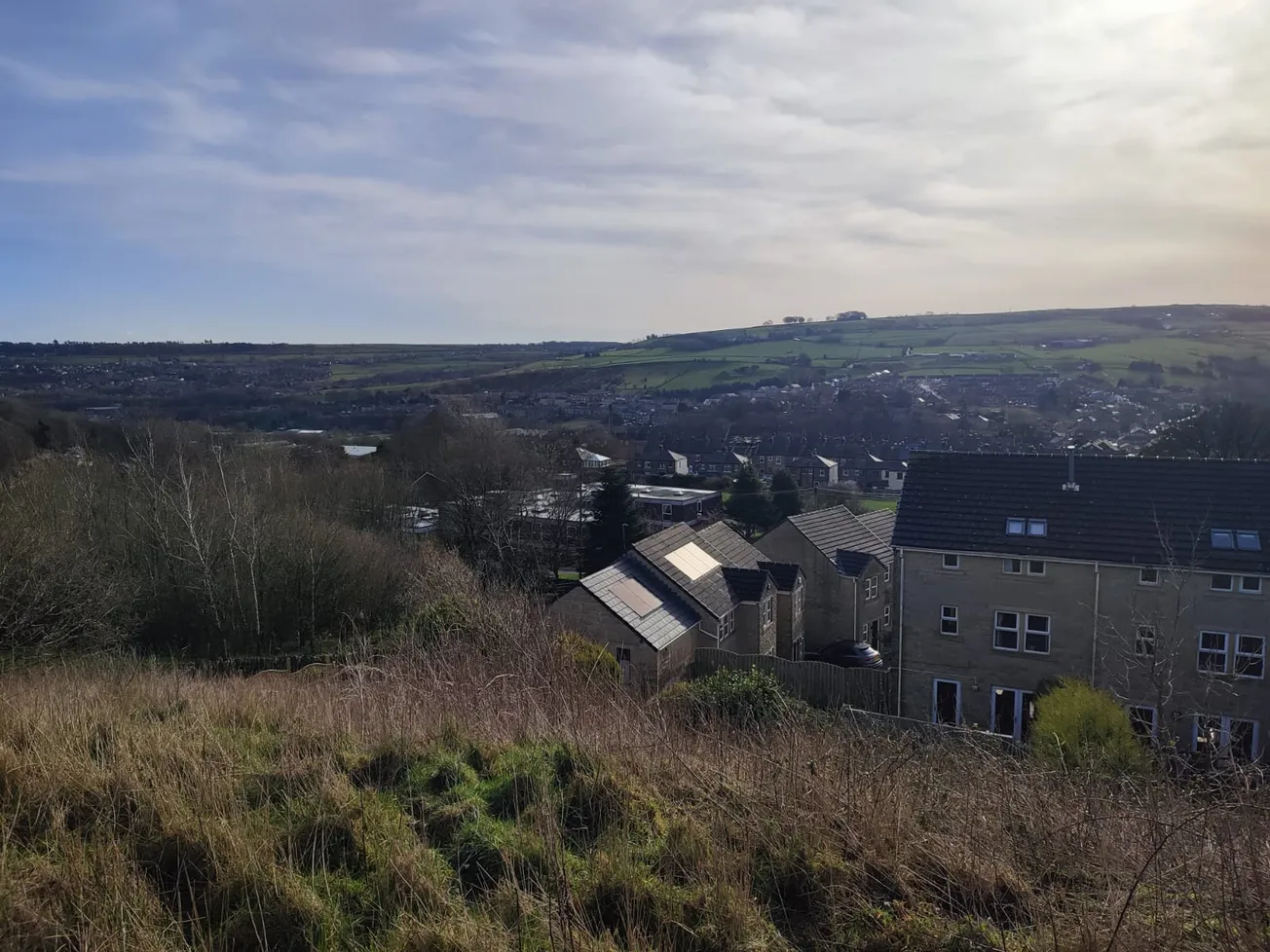
The pull up out of Bradford is a slog. There’s the gradient, but also the sense that the bike lane isn’t really recognised as a distinct entity here. Cars go over it without compunction. In a demoralising turn of events, by the time I’ve left the city, I’ve counted more vehicles parked in the bike lane (5) than I have other cyclists (0).
The other drawback is that the route runs along a busy main road the entire way so, even if it’s relatively safe, it’s still quite unpleasant pedalling through traffic noise and diesel-tinged air. I keep going and after a few miles pop into the Proper Bike shop, where I get chatting to manager Yas Al-Ausi. What does he think of the local cycling infrastructure? He’s initially a little guarded on the topic. “That’s contentious,” is all I can get out of him at first. But, after some prodding, he admits jovially that it’s only contentious: “Because it’s shit! It’s like the transport planners have never ridden a bike before.”
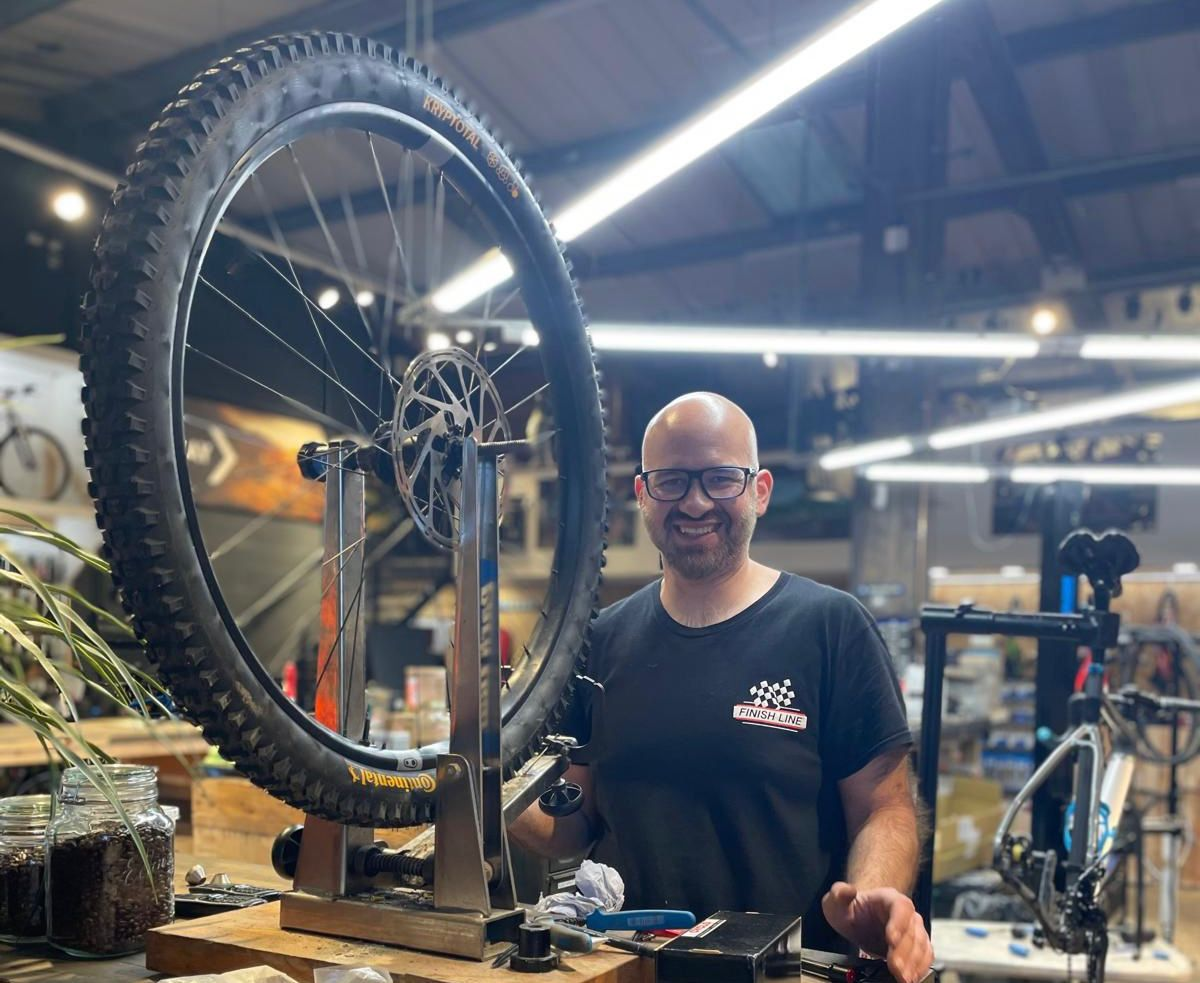
For example, people getting off at bus stops immediately spill out onto the CS1, which he alleges causes frequent crashes. Then there are the cyclists who puncture their tyres on smashed glass. “It’s good for business, but I don’t want to sell inner tubes,” Yas tells me. He’d rather people could just cycle unimpeded. As for getting new people into cycling, he’s not convinced the lane has helped much in the long term. “It gives them the confidence to ride, but once they’ve used it, they realise it’s not as safe as they thought,” he says.
Yas is far from the first person to notice some of these issues. Even when the CS1 first opened in 2016, a transport consultant described it to the BBC as a “missed opportunity,” highlighting the problem of pedestrians having to “share space with cyclists, particularly at bus stops”. Councillor Keith Wakefield admitted at the time that the council knew CS1 was “not perfect,” adding: “We'll be going back to address some of the concerns… this is a compromise.”
How would I rate that compromise? It wouldn’t meet Dutch standards, though that’s a pretty high bar, given that the Dutch literally buy houses and knock them down if they’re in the way of bike lanes. Some sections are good and smooth and it’s definitely a step up from your standard “paint on the road” British bike lane. But it’s never long before you hit a crossing where you’re going to have to press the button and wait for a few minutes and, at one point in Stanningley, the lane disappears completely. There are no signs warning riders and, for the next five minutes, I’m genuinely concerned I’m going the wrong way.
Towards the end of my sojourn along the CS1, as I approach Leeds, I find myself fighting a battle I was wholly unprepared for. The lanes are there, but it’s not really clear where to go, and the route keeps criss-crossing dual carriageways. At one point, I end up thoroughly muddled and cycling the wrong way down a one-way lane. Then, shortly before I get to the station, it’s like I’ve been plopped down in Bradford once again: the cars drop away, the vista opens, and I feel free.
Despite the CS1’s flaws, 31-year-old cycling fanatic Daoud Al-Janabi, who lives in Armley and regularly uses the eastern end of the route, is still a fan. “I think it’s a lovely thing, I just wish it was a bit more cared for”, he tells me. He says the route is reasonably well used, but never that busy, pointing out that the path along the canal is a much quieter and more pleasant alternative for the Leeds section.
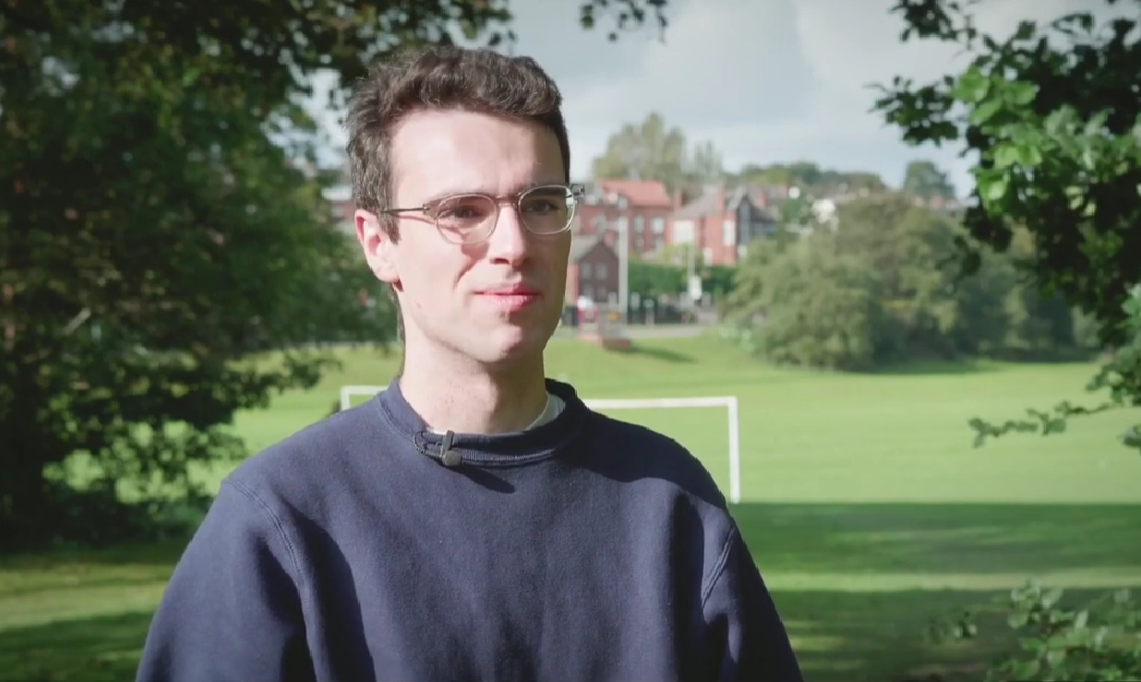
But does he think Leeds as a whole is becoming more cycle-able? "Oh, absolutely. Absolutely." He’s happy to see how much routes have improved in the city centre, and now other neighbourhoods are catching up. “I’m very happy with the direction the council has gone with all of this. It seems to be a long-term vision.”
When it comes to publishing data about cycling — and, for that matter, everything else — Leeds council is definitely whizzing past the competition. The Data Mill North website, where various councils upload the fruits of their number-crunching efforts, boasts 303 datasets from Leeds. (My home city of Sheffield, by contrast, has 11.)
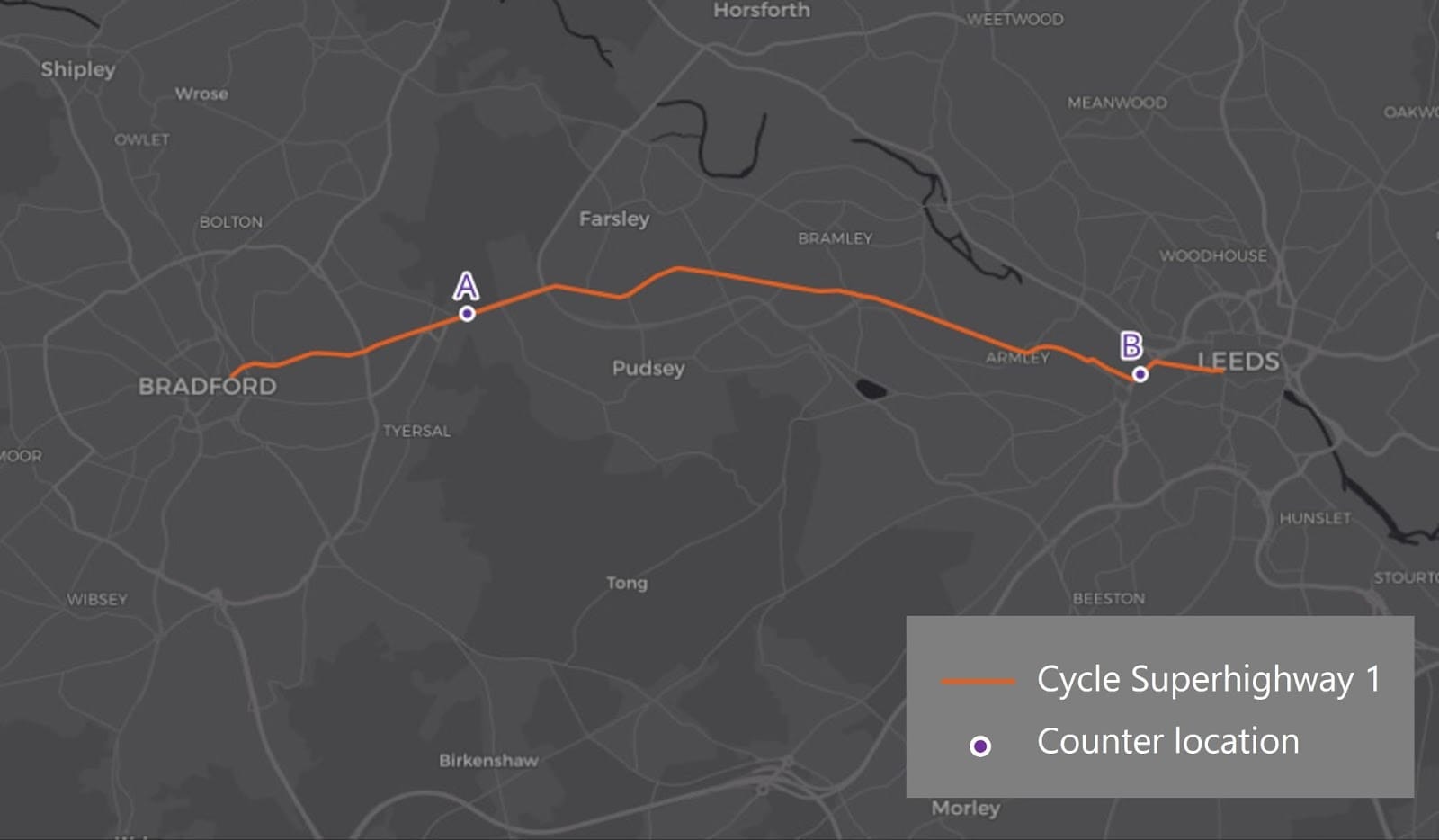
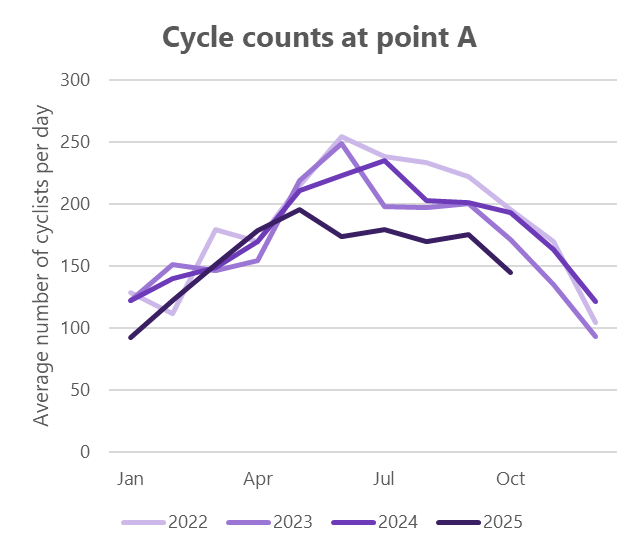
The dataset I’m interested in, optimistically titled “Leeds Annual Cycle Growth,” provides monthly updates for 26 cycle counters on the network, making it possible to track how busy the CS1 really is. Point A on the map above, just outside Bradford, typically sees 100-250 cyclists go past a day (counting both directions), depending on the time of year. That’s not nothing, but still pales in comparison to the number of cars barrelling past. More dishearteningly, the number of cyclists dipped in 2025. If cycling was taking off, you’d expect to see the opposite.
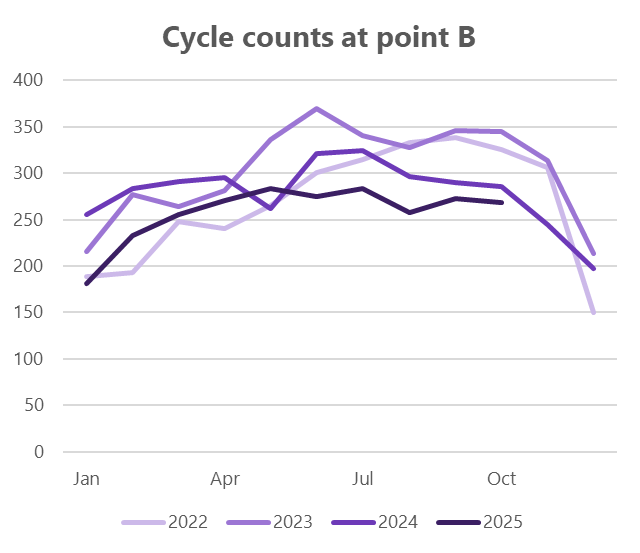
At point B, over on the Leeds side, the number of cyclists is higher, but follows a similar downward trend. This may have been in part because of work being done on the roads around there, but still suggests bike-riding is in a slight slump.
So are the nay-sayers in the Yorkshire Evening Post right? Should the council heed the evidence of their own data and turn these cycle lanes into something more useful? Not quite yet, I’d argue.
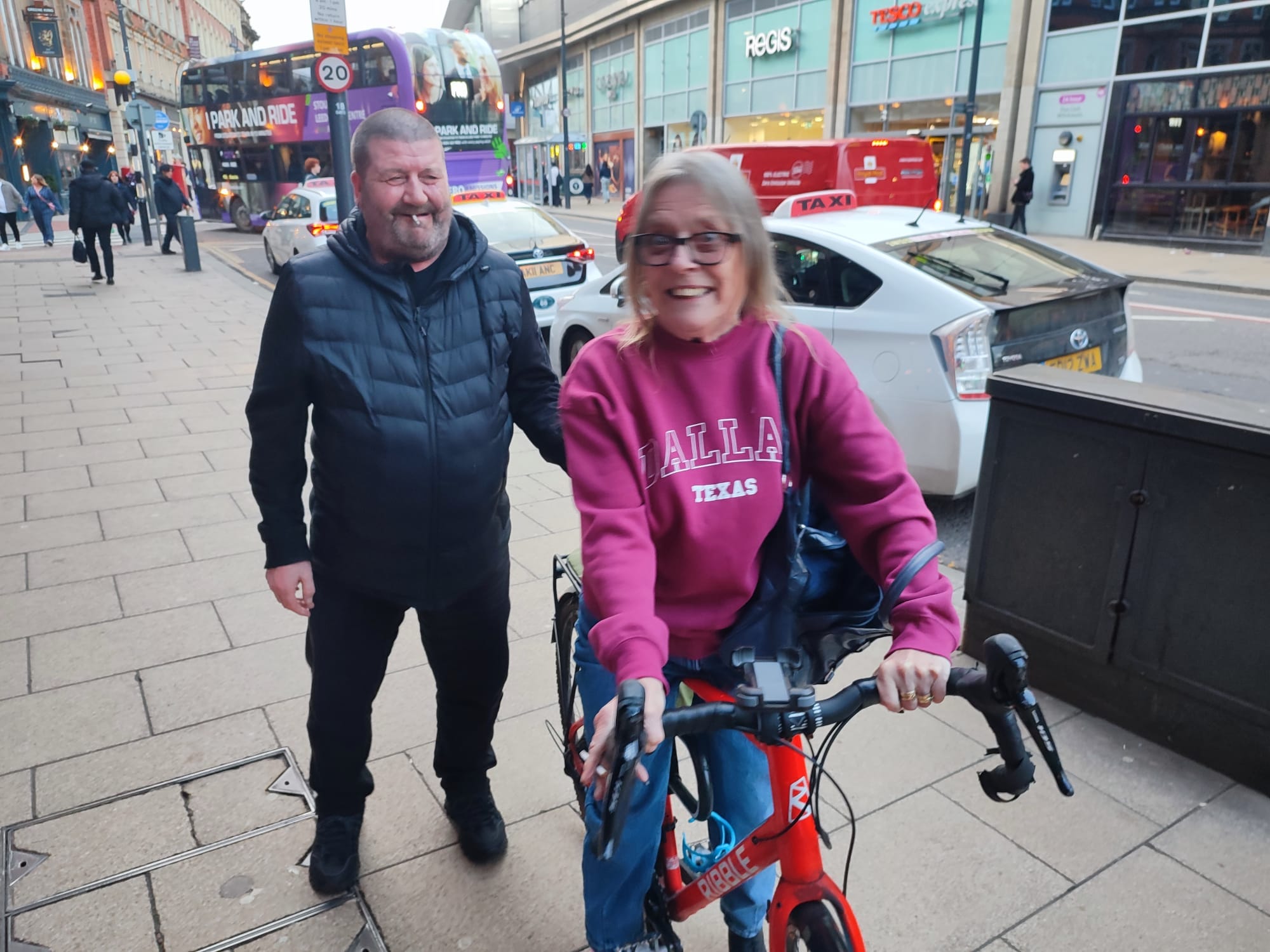
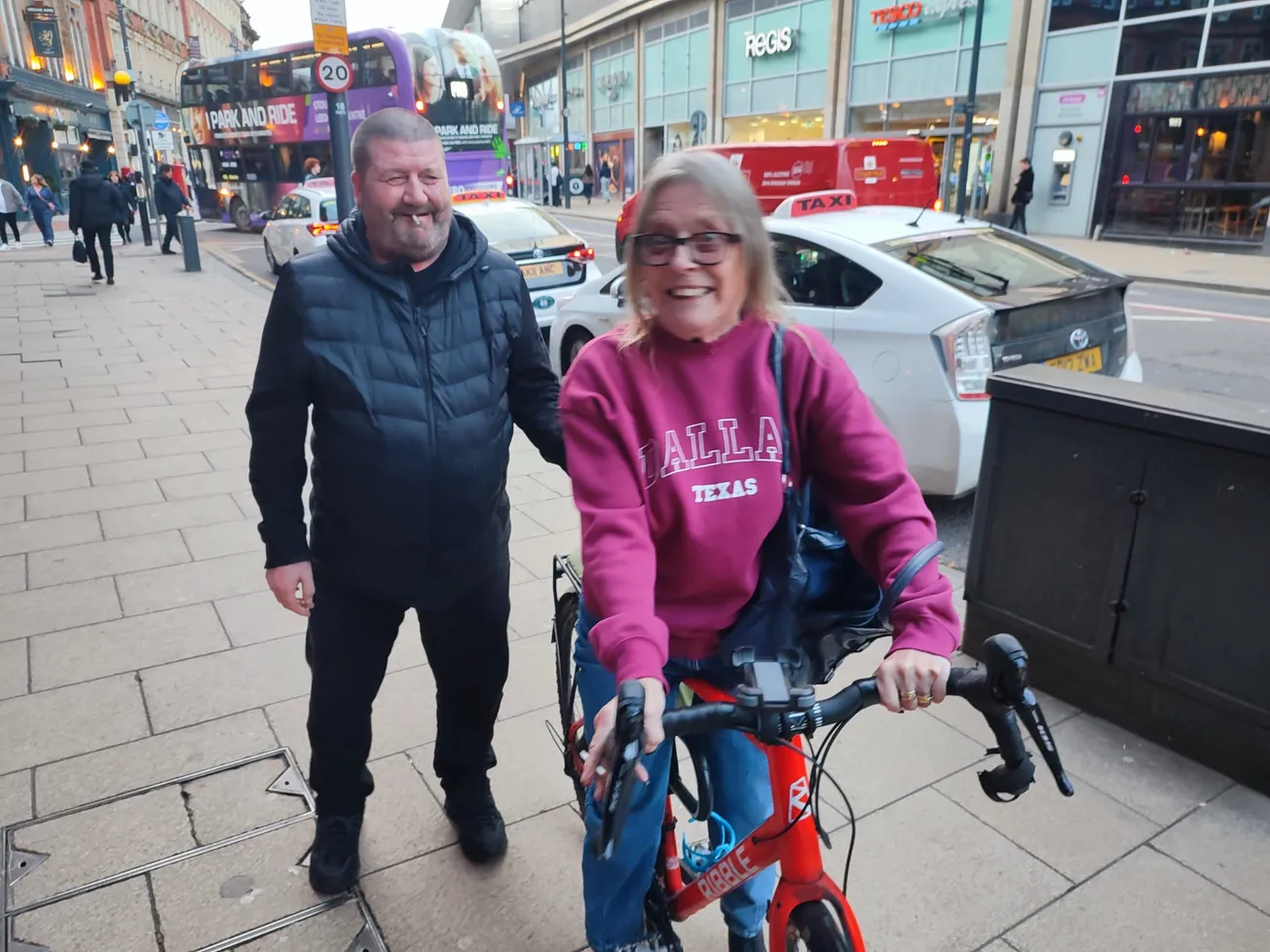
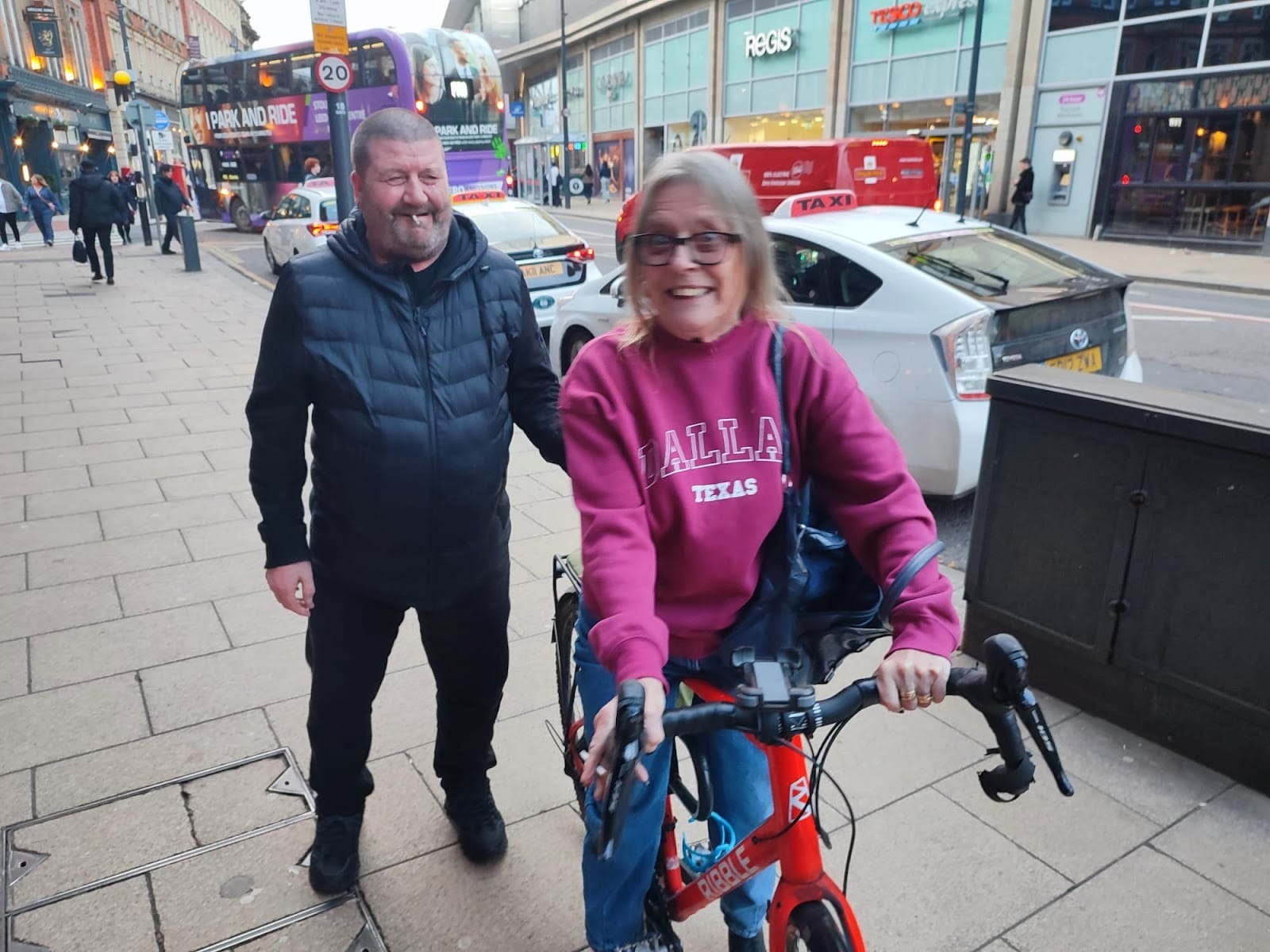
In fact, as I wheel my bike towards the Brewery tap, one of my favourite station-adjacent pubs, for a celebratory pint, I find evidence that it’s never too late to get people excited about cycling. A woman celebrating her 70th birthday with a small gaggle of friends accosts me. “Can I have a go on your bike?” I figure it would be churlish to refuse, although it ends up being far too high for her — cue much mirth and dirty jokes from the group about “getting a leg over”.
Perhaps it’s naïve, but I’d like to hope her enthusiasm to get on a bike will be replicated across Leeds and Bradford, provided the councils stick at it. Yes, some of the lanes aren’t being used that well, such as CS1. It’s not that surprising, given it isn't the most pleasant experience. But, having sampled the best that both cities have to offer, I'd like to hope it’ll catch on if the rest of the route can rise to the same level. As Al-Janabi puts it to me, “we shouldn’t fall into that easy defeatism where it's like: 'Oh everyone isn't cycling immediately, this is a failure’."
Thanks for reading. This article is an example of the kind of local journalism we'd love to bring to Leeds and West Yorkshire.
We're Mill Media, a small company that has now set up new newspapers in six UK cities. We think there's a real gap for something different here: in-depth, nuanced reporting that lets readers make their own minds up.
If we can get 500 people pledging to back us, we will launch. To find out more about us and pledge your support, just click the button below.